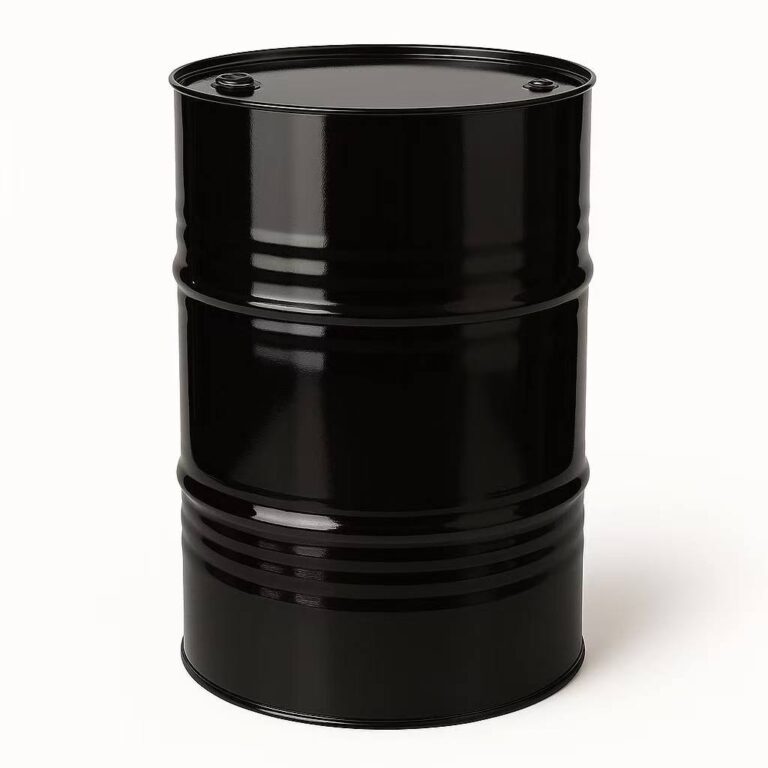
| Updated | Display | Daily Range (±USD) | Today Price (USD/MT) | Packaging | Grade |
|---|---|---|---|---|---|
| 2026.01.06 | 362$±3$ | 3 | 362 | FOB Bandar Abbas-Drum | 60/70 |
| 2026.01.06 | 353$±3$ | 3 | 353 | FOB Bandar Abbas-Jumbo Bag | 60/70 |
| 2026.01.06 | 345$±3$ | 3 | 345 | FOB Bandar Abbas-Flexi Bag | 60/70 |
| 2026.01.06 | 365$±3$ | 3 | 365 | FOB Bandar Abbas-Drum | 80/100 |
| 2026.01.06 | 357$±3$ | 3 | 357 | FOB Bandar Abbas-Jumbo Bag | 80/100 |
| 2026.01.06 | 345$±3$ | 3 | 345 | FOB Bandar Abbas-Flexi Bag | 80/100 |
| 2026.01.06 | 365$±3$ | 3 | 365 | FOB Bandar Abbas-Drum | 200/300 |
| 2026.01.06 | 353$±3$ | 3 | 353 | FOB Bandar Abbas-Flexi Bag | 200/300 |
| 2026.01.06 | 365$±3$ | 3 | 365 | FOB Bandar Abbas-Flexi Bag | 35/50 |
| 2026.01.06 | 365$±3$ | 3 | 365 | FOB Bandar Abbas-Drum | 40/50 |
| 2026.01.06 | 365$±3$ | 3 | 365 | FOB Bandar Abbas-Drum | 50/70 |
| 2026.01.06 | 362$±3$ | 3 | 362 | FOB Bandar Abbas-Drum | VG 10 |
| 2026.01.06 | 365$±3$ | 3 | 365 | FOB Bandar Abbas-Drum | VG 30 |
| 2026.01.06 | 365$±3$ | 3 | 365 | FOB Bandar Abbas-Drum | VG 40 |
| 2026.01.06 | 3620±3$ | 3 | 360 | FOB Bandar Abbas-Drum | AH 70 |
| 2026.01.06 | 362$±3$ | 3 | 362 | FOB Bandar Abbas-Drum | AH 90 |
| 2026.01.06 | 380$±3$ | 3 | 380 | FOB Bandar Abbas-Drum | PG 76-10 |
| 2026.01.06 | 375$±3$ | 3 | 375 | FOB Bandar Abbas-Drum | PG 70-10 |
| 2026.01.06 | 61.5$±3$ | 3 | 61.5 | London-Bulk | Curde Oil Brent |
| 2026.01.06 | 58$±3$ | 3 | 58 | Texas-Bulk | Curde Oil WTI |
| 2026.01.06 | 62$±3$ | 3 | 62 | FOB UAE | Curde Oil Dubai |
| 2026.01.06 | 60±3$ | 3 | 59.8 | OPEC Basket |
Bitumen Emulsion Grades – Specifications, Types & Road Construction Applications
Bitumen emulsion is a water-based asphalt binder produced by dispersing bitumen particles in water using specialized emulsifying agents. This technology allows asphalt to be applied at ambient temperatures, making bitumen emulsion an efficient, safe, and environmentally responsible solution for modern road construction and pavement maintenance projects.
Bitumen emulsions are classified according to their setting behavior and electrical charge. The most commonly supplied grades include CRS (Cationic Rapid Setting), CMS (Cationic Medium Setting), and CSS (Cationic Slow Setting). Each grade is engineered to meet specific construction requirements, aggregate types, and site conditions, ensuring optimal bonding and performance.
Rapid-setting grades such as CRS-1 and CRS-2 are designed for quick breaking and fast strength development, making them ideal for surface dressing, chip seals, and emergency road repairs where traffic reopening time is critical. Medium-setting emulsions like CMS-2 provide controlled breaking characteristics suitable for cold mix asphalt and patching applications.
Bitumen emulsion grades are widely used in:
- Tack coat and prime coat applications
- Surface dressing and chip sealing
- Cold mix asphalt production
- Slurry seal and micro-surfacing systems
- Road maintenance and pavement rehabilitation works
One of the key advantages of bitumen emulsion is its excellent adhesion to aggregates, even in damp or cold conditions. This property significantly reduces stripping, moisture damage, and premature pavement failure. In addition, the elimination of heating during application results in lower energy consumption, reduced emissions, and improved safety for construction crews.
By selecting the appropriate bitumen emulsion grade, contractors and infrastructure developers can achieve reliable performance, extended pavement life, and cost-effective execution across a wide range of climatic conditions and traffic demands. Bitumen emulsion remains a key material for sustainable, efficient, and high-performance road construction systems worldwide.
| K1-60 | CRS1 | CRS2 | |||||
|---|---|---|---|---|---|---|---|
| Specification | Min | Max | Min | Max | Min | Max | Test Method |
| Binder Content or Bitumen Residue (%) | 63 | – | 63 | – | – | – | ASTM D6997 |
| Storage Stability in 24-H (%) | – | 1 | – | 1 | – | – | ASTM D6930 |
| Sieve Test (%) | – | 0.1 | – | 0.1 | – | – | ASTM D6933 |
| Viscosity Saybolt Furel at 50 °C | 20 | – | 20 | – | – | – | ASTM D7496 |
| Particle Charge | Positive | Positive | – | – | ASTM D244 / ASTM D7402 | ||
| Penetration at 25 °C, 100 g, 5 sec (0.1 mm) | 50 | – | 50 | – | – | – | ASTM D5 |
| Ductility at 25 °C, 5 cm/min | 40 | – | 40 | – | – | – | ASTM D113 |
| Solubility in TCE (wt%) | 97.5 | – | 97.5 | – | – | – | ASTM D2042 |
| Viscosity, Saybolt Furol at 50 °C, SFS | – | – | – | – | 100 | 400 | ASTM D244 |
| Storage stability test, 24-h, % | – | – | – | – | – | 1 | ASTM D6930 |
| Demulsibility, 35 mL, 0.8% dioctyl sodium sulfosuccinate, % | – | – | – | – | 40 | – | ASTM D244 |
| Particle charge test | – | – | – | – | Positive | ASTM D244 | |
| Sieve test, % | – | – | – | – | – | 0.1 | ASTM D6933 |
| Oil distillate, by volume of emulsion, % | – | – | – | – | – | 3 | ASTM D6997 |
| Residue, % | – | – | – | – | 65 | – | ASTM D244 |
| Penetration, 25 °C (77 °F), 100 g, 5 s | – | – | – | – | 100 | 250 | ASTM D5 |
| Ductility, 25 °C (77 °F), 5 cm/min, cm | – | – | – | – | 40 | – | ASTM D113 |
| Solubility in trichloroethylene, % | – | – | – | – | 97.5 | – | ASTM D2042 |